Answer-First (40–60 words)
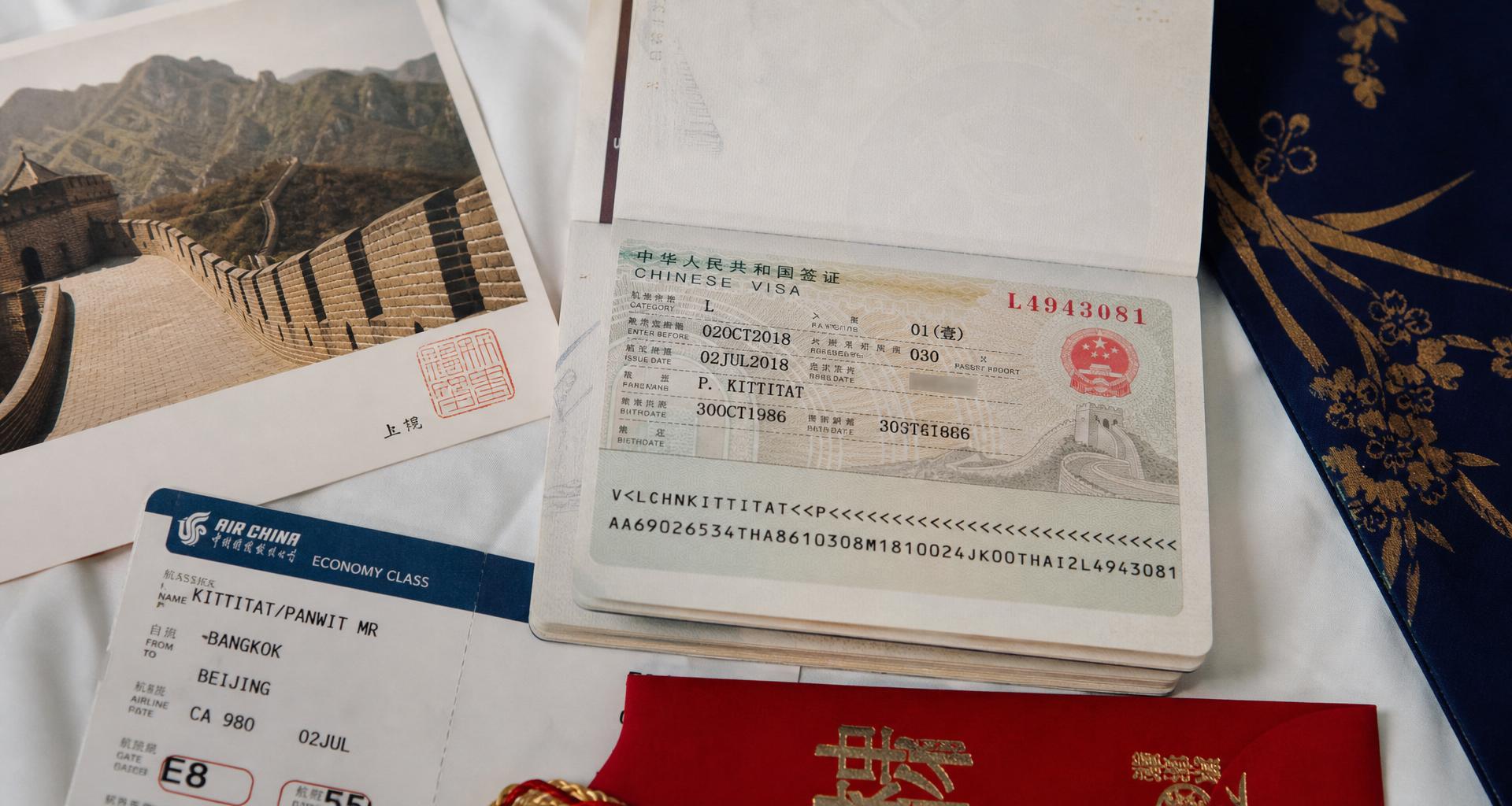
China's Z visa for work in mainland China requires a 4-step chain from Thailand: (1) Chinese employer obtains Notification Letter from SAFEA (State Administration of Foreign Experts Affairs, now under MOST), (2) Thai applicant applies at China Visa Application Service Center (CVASC) Bangkok with Notification Letter + criminal record + medical + degree (all consular-legalised since China is NOT in Hague Apostille), (3) Z visa stamped in 4–7 working days (CNY 500 single-entry), (4) within 30 days of arrival in China, convert to Residence Permit at local Public Security Bureau Entry-Exit Administration. The 1 November 2025 unified system merged work permits and residence permits into single 'Permit for Foreigner Working in China' card.
- ▸SAFEA tier classification A/B/C — affects fast-track + family bring-along
- ▸China is NOT Hague Apostille — full consular legalisation chain required
- ▸CVASC Bangkok fee CNY 500 (THB ~2,500) single-entry
- ▸Processing 4–7 working days at CVASC
- ▸Within 30 days of arrival — convert to Residence Permit at PSB
สรุปสั้น: China Visa
"Complete 2026 guide to China's Z Work Visa from Thailand: SAFEA Foreigner's Work Permit (A/B/C tier classification), Notification Letter, CNY 500 visa fee at Chinese Visa Application Service Center Bangkok, post-arrival residence permit conversion within 30 days, and the 1 November 2025 unified work permit system update."
- 01Why does China not accept Apostille even after the 2023 Hague accession?
- China DID join the Hague Apostille Convention effective 7 November 2023 — but for documents FROM China going to other Hague members. INBOUND foreign documents to China generally still require traditional consular legalisation through Chinese Embassy / Consulate of the issuing country. Confusing exception: some Chinese ministries (immigration in pilot zones, some courts in Shanghai/Beijing) accept Apostilled foreign documents directly. For Z visa work permit, SAFEA still requires the full chain (Thailand MOFA → Chinese Embassy Bangkok) as of September 2026 — Apostille from MOFA Thailand is NOT sufficient. iVC handles the full chain.
- 02How long total from offer letter to working in China?
- Realistic 2026 timeline from Thailand: 8–14 weeks. Breakdown: SAFEA Notification Letter 2–4 weeks (faster for tier A), Thai-side document collection + MOFA + Chinese Embassy legalisation 3–4 weeks, CVASC visa processing 1 week, travel + arrival, PSB residence permit conversion 2 weeks. Tier A applicants with iVC's parallel-track service achieve 6–8 weeks end-to-end. Tier C with restricted-region postings (Tibet, Xinjiang) may extend to 16–20 weeks due to additional internal security clearance.
- 03Can my spouse and children come on the same Z visa?
- Spouse + minor children (under 18) qualify for S1 visa (long-term dependent), issued in parallel with the Z visa once Notification Letter approved. S1 visa allows residence but NOT work — spouse who wants to work in China must apply separately for own Z visa with own SAFEA Notification Letter from a Chinese employer. School-aged children attend international schools (most major cities have multiple British/American/IB curriculum options) — public schools accept foreign children but Chinese-language instruction. Family pack at CVASC Bangkok: Z + 3× S1 = ~THB 12,000 total.
แหล่งข้อมูล:iVC — International Visa Center · ข้อมูลปรับปรุง 2026
Step 1 — Chinese employer secures SAFEA Notification Letter
The Chinese employer (must be officially registered, hold Foreign Employment Licence 外国人就业许可证) applies online via the unified MOST portal (fwp.safea.gov.cn) for Notification Letter (通知函). Required Chinese-side documents: company business licence, foreign employment quota approval, draft labour contract, applicant's CV. The applicant is classified into tier A (high-end talent — fast-track, ≤5 working days), tier B (professional talent — standard, 10–15 working days), or tier C (low-end / shortage — 15+ working days, restricted regions). Tier A criteria 2026: PhD + 3 yrs experience, OR salary exceeding 6× local average wage, OR Fortune 500 senior executive, OR returning Chinese national with foreign credentials. Tier A holders can bring spouse + minor children on dependent S1 visa from day 1. Notification Letter valid 6 months once issued.
Step 2 — Thai applicant assembles document pack in Thailand
While employer processes Notification Letter, applicant prepares in Bangkok: (a) passport (12+ months validity, 2 blank pages); (b) Thai criminal record from Royal Thai Police HQ — original Thai + certified Chinese translation + consular legalisation chain: MOFA Chaeng Watthana legalisation → Chinese Embassy Bangkok consular legalisation (since China is not Hague, Apostille is NOT accepted); (c) highest degree certificate — original + Chinese translation + same MOFA + Chinese Embassy legalisation (degrees from Thailand need additional CHED-equivalent verification through Thai MOE); (d) medical examination certificate (Form for Physical Examination of Foreigner) from approved Bangkok hospitals — BNH, Bumrungrad, Samitivej Sukhumvit, Praram 9 — fee THB 3,500–5,500, includes HIV test, chest X-ray, ECG, blood panel; (e) 6 cm × 6 cm white-background photo; (f) labour contract signed by both parties; (g) Notification Letter (PDF from employer).
Step 3 — Submit to CVASC Bangkok and visa issuance
China Visa Application Service Center Bangkok (Thai CC Tower 11/F, 889 Sathorn Road) accepts Z visa applications Monday–Friday 09:00–15:00. Walk-in or appointment via visaforchina.cn. Submission fee CNY 500 single-entry Z visa + CNY 200 service fee = ~THB 3,400 total. Processing: standard 4 working days, express 3 working days (+CNY 200), super-express 2 working days (+CNY 350). Photo + biometric capture done on-site. Pickup with payment receipt — pickup days Mon–Fri 13:30–15:30. The Z visa is single-entry, valid 3 months for one entry, allows 30-day stay during which residence permit must be obtained. Couriered passport return available (THB 250 in Bangkok metro, THB 400 nationwide).
Step 4 — Post-arrival in China — Residence Permit conversion at PSB
Within 30 calendar days of arrival (NOT working days), the holder must visit the local Public Security Bureau Entry-Exit Administration (公安局出入境管理处) in the city of employment to convert Z visa to Residence Permit (居留许可). Required: passport with Z visa, hotel/landlord registration form (already filed within 24 hours of arrival by hotel automatically, or by landlord at local PSB), employer letter, post-arrival medical re-verification at China International Travel Healthcare Centre (国际旅行卫生保健中心) — fee CNY 600, takes 1 day. PSB issues Residence Permit (sticker in passport) valid 1–5 years matching contract length. Post-1 November 2025: the work permit and residence permit are unified into single laminated card 'Permit for Foreigner Working in China' — one application, one fee CNY 800.
What changed in 2025–2026 — unified permit and Tier A relaxation
Two major reforms: (1) Unified permit system effective 1 November 2025 — eliminates the separate Work Permit (issued by MOHRSS) and Residence Permit (issued by PSB) duplication. Foreigner now holds single card, single application, single renewal. Saves 3–4 weeks and CNY 600. (2) Tier A criteria relaxation effective 1 March 2026 — salary threshold lowered from 6× to 4× local average wage, expanded to include digital nomads in pilot zones (Hainan FTP, Shenzhen Qianhai, Shanghai Lingang). Tier A holders now get 5-year residence permit by default (was 2 years), spouse work-permit-free under newly-introduced S1+ category, and accelerated path to permanent residence (D visa) after 4 years (was 8). Thailand-specific: BOI-Thailand-recognised executives moving to China for joint-venture roles get expedited tier B-to-A upgrade after 12 months.
คำถามที่พบบ่อย
- Why does China not accept Apostille even after the 2023 Hague accession?
- China DID join the Hague Apostille Convention effective 7 November 2023 — but for documents FROM China going to other Hague members. INBOUND foreign documents to China generally still require traditional consular legalisation through Chinese Embassy / Consulate of the issuing country. Confusing exception: some Chinese ministries (immigration in pilot zones, some courts in Shanghai/Beijing) accept Apostilled foreign documents directly. For Z visa work permit, SAFEA still requires the full chain (Thailand MOFA → Chinese Embassy Bangkok) as of September 2026 — Apostille from MOFA Thailand is NOT sufficient. iVC handles the full chain.
- How long total from offer letter to working in China?
- Realistic 2026 timeline from Thailand: 8–14 weeks. Breakdown: SAFEA Notification Letter 2–4 weeks (faster for tier A), Thai-side document collection + MOFA + Chinese Embassy legalisation 3–4 weeks, CVASC visa processing 1 week, travel + arrival, PSB residence permit conversion 2 weeks. Tier A applicants with iVC's parallel-track service achieve 6–8 weeks end-to-end. Tier C with restricted-region postings (Tibet, Xinjiang) may extend to 16–20 weeks due to additional internal security clearance.
- Can my spouse and children come on the same Z visa?
- Spouse + minor children (under 18) qualify for S1 visa (long-term dependent), issued in parallel with the Z visa once Notification Letter approved. S1 visa allows residence but NOT work — spouse who wants to work in China must apply separately for own Z visa with own SAFEA Notification Letter from a Chinese employer. School-aged children attend international schools (most major cities have multiple British/American/IB curriculum options) — public schools accept foreign children but Chinese-language instruction. Family pack at CVASC Bangkok: Z + 3× S1 = ~THB 12,000 total.
- What is the salary minimum for the Z work permit?
- No nationwide minimum but local government floors apply. Tier B (standard) requires salary at or above local average wage — Beijing 2026 floor CNY 132,000/yr, Shanghai CNY 148,000/yr, Shenzhen CNY 135,000/yr, Guangzhou CNY 118,000/yr, second-tier cities (Chengdu, Hangzhou, Suzhou) CNY 95,000–110,000/yr. Tier A relaxed 2026 = 4× local average (Beijing ~CNY 528,000/yr). Below tier B floor → must apply as tier C with restricted industry list and provincial-level approval (slower). iVC's free preliminary tier assessment based on offer letter is the first step.
- Is Z visa renewal automatic from inside China?
- Renewal is done in China at local PSB, not from Thailand. Application opens 30 days before residence permit expiry. Required: current Residence Permit, passport, employer letter confirming continued employment, updated labour contract (if changed), post-2025 unified system means single renewal application replaces dual work-permit-then-residence-permit chain. Fee CNY 800 for 1–5 year renewal. Failure to renew before expiry triggers CNY 500/day overstay fine + potential visa cancellation. iVC's China-side partner office handles renewal for clients still working through us.
- How does iVC support China Z visa from Thailand?
- iVC's China Z Visa Package (THB 28,000–48,000) covers: (1) tier A/B/C assessment based on your offer letter — free initial review; (2) full document chain — Thai criminal record collection, Chinese translation by court translator (in-house, 12 yrs experience), MOFA Chaeng Watthana legalisation, Chinese Embassy Bangkok consular legalisation; (3) degree authentication through Thai MOE if your degree is Thai-issued; (4) medical examination scheduling at BNH or Bumrungrad with form pre-filled; (5) CVASC Bangkok submission + pickup; (6) post-arrival China handover to our Shanghai partner office for PSB residence permit conversion (additional CNY 1,500 settled in China). Tier A executives get 6–8 week priority track.
เปรียบเทียบวีซ่าทำงาน/พำนักระยะยาวในไทย
เลือกประเภทตามลักษณะรายได้และผู้ว่าจ้าง ไม่ใช่ตามระยะเวลาอย่างเดียว
| ประเด็น | Non-B + Work Permit | DTV | LTR |
|---|---|---|---|
| เหมาะกับ | ทำงานกับนายจ้างในไทย | ทำงานทางไกลให้นายจ้าง/ลูกค้าต่างประเทศ | ผู้มีคุณสมบัติตามหมวดที่ BOI กำหนด |
| ต้องมีนายจ้างไทยไหม | ต้องมี | ไม่ต้อง | แล้วแต่หมวดที่สมัคร |
| ใบอนุญาตทำงาน | ต้องขอ | ไม่ครอบคลุมการทำงานให้กิจการในไทย | มีช่องทางเฉพาะตามหมวด |
| เอกสารหลัก | เอกสารบริษัทนายจ้าง + คุณวุฒิ | หลักฐานการทำงานทางไกล/กิจกรรมที่รองรับ | หลักฐานคุณสมบัติตามหมวด |
ทำเอง vs ให้ iVC ดูแลให้ทั้งกระบวนการ
ทั้งสองทางทำได้จริง ต่างกันที่เวลาที่คุณต้องใช้ ความเสี่ยงที่เอกสารถูกตีกลับ และการมีที่ปรึกษาคอยตรวจก่อนยื่น
| ประเด็น | ดำเนินการเอง | ให้ iVC ดูแล |
|---|---|---|
| การตรวจเอกสารก่อนยื่น | ตรวจเองจากข้อมูลหน้าเว็บหน่วยงาน | ที่ปรึกษาตรวจทีละฉบับตามข้อกำหนดปลายทางก่อนยื่นจริง |
| เวลาที่คุณต้องใช้ | เดินทาง ต่อคิว และติดตามผลด้วยตัวเอง | เราเดินเรื่องและติดตามให้ คุณรับรายงานความคืบหน้า |
| ความเสี่ยงตีกลับ | พบบ่อยจากการสะกดชื่อไม่ตรง เอกสารหมดอายุ หรือลำดับรับรองผิดขั้น | ตรวจจุดที่ตีกลับบ่อยตั้งแต่ต้นทาง และแก้ก่อนยื่น |
| ความรู้เฉพาะทาง | ต้องศึกษาระเบียบของแต่ละหน่วยงานเอง | ทีมงานประสบการณ์ 15+ ปี ให้คำปรึกษาตลอดเคส |
| กรณีเอกสารมีปัญหา | ต้องเริ่มขั้นตอนใหม่ด้วยตัวเอง | เราประเมินทางเลือกและวางแผนแก้ให้ทันที |
เราทำงานแบบที่ปรึกษา ไม่ใช่แค่รับเดินเอกสาร
ประสบการณ์มากกว่า 15 ปี (ตั้งแต่ปี 2554) กับงานแปล รับรองเอกสาร และเตรียมเอกสารประกอบวีซ่า ทำให้เราเห็นรูปแบบที่เอกสารถูกตีกลับซ้ำ ๆ และวางแผนตั้งแต่ต้นทางเพื่อลดโอกาสนั้น
- ประเมินเคสก่อนเริ่ม
- ดูโปรไฟล์ ประเทศปลายทาง และหน่วยงานผู้รับ ก่อนบอกว่าต้องใช้เส้นทางรับรองแบบใด
- วางแผนเอกสารรายบุคคล
- จัดลำดับว่าเอกสารใดต้องคัดใหม่ ใดต้องแปลก่อน และใดต้องรับรองก่อนหลัง
- เตือนความเสี่ยงล่วงหน้า
- แจ้งจุดที่มักถูกตีกลับ เช่น การสะกดชื่อไม่ตรงหนังสือเดินทาง หรืออายุเอกสารที่หน่วยงานปลายทางกำหนด
- ติดตามจนจบเคส
- รายงานความคืบหน้าเป็นระยะ และประเมินทางเลือกทันทีหากหน่วยงานขอเอกสารเพิ่ม
- ปรึกษาต่อเนื่องหลังงานเสร็จ
- เอกสารชุดเดิมมักถูกใช้ซ้ำในขั้นตอนถัดไป เราช่วยดูว่ายังใช้ได้หรือต้องคัดใหม่
ถ้าไม่อยากเสียเวลาไล่ขั้นตอนเอง ส่งรายละเอียดเคสมาให้เราประเมินก่อนได้ แล้วค่อยตัดสินใจ
คู่มือปฏิบัติ: วีซ่าไทย / ใบอนุญาตทำงาน
ชาวต่างชาติที่จะทำงานในไทยต้องมีวีซ่าประเภทที่ถูกต้อง (เช่น Non-B, DTV, LTR) และใบอนุญาตทำงานจากกรมการจัดหางาน ก่อนเริ่มปฏิบัติงาน
รายการเอกสารที่ต้องเตรียม
- หนังสือเดินทางอายุคงเหลือเพียงพอ พร้อมหน้าวีซ่าและ TM.6/บัตรขาเข้า (ถ้ามี)
- หนังสือรับรองบริษัท บัญชีรายชื่อผู้ถือหุ้น และงบการเงินของนายจ้าง
- สัญญาจ้าง ระบุตำแหน่ง หน้าที่ และสถานที่ทำงาน
- วุฒิการศึกษาและหนังสือรับรองประสบการณ์ แปลและรับรองตามที่กำหนด
- ใบรับรองแพทย์ตามแบบที่กรมการจัดหางานกำหนด
ขั้นตอนและวิธีการ
1. เลือกประเภทวีซ่าที่ตรงกับกิจกรรมจริง
ประเมินว่าเป็นการจ้างงาน การลงทุน การทำงานทางไกล หรือการพำนักระยะยาว
กรอบเวลาโดยประมาณ: 1–3 วัน
2. ยื่นขอวีซ่าที่สถานทูต/สถานกงสุลไทย
เตรียมเอกสารนายจ้างและเอกสารส่วนบุคคลตามที่สถานทูตกำหนด
กรอบเวลาโดยประมาณ: 5–15 วันทำการ
3. ยื่นขอใบอนุญาตทำงาน
ยื่นที่สำนักงานจัดหางานในพื้นที่ หรือ One Stop Service สำหรับกิจการที่เข้าเกณฑ์
กรอบเวลาโดยประมาณ: 3–10 วันทำการ
4. รายงานตัวและต่ออายุ
รายงานตัว 90 วัน ต่ออายุวีซ่าและใบอนุญาตทำงานก่อนหมดอายุ
กรอบเวลาโดยประมาณ: ตลอดระยะพำนัก
คำแนะนำจากงานจริง
- ตำแหน่งงานต้องไม่อยู่ในอาชีพที่สงวนไว้สำหรับคนไทย ควรตรวจก่อนทำสัญญาจ้าง
- เก็บใบรับรายงานตัว 90 วันทุกครั้ง เพราะใช้ประกอบการต่ออายุครั้งถัดไป
ข้อควรระวัง
- การทำงานก่อนได้รับใบอนุญาตมีโทษตามกฎหมายทั้งลูกจ้างและนายจ้าง
- การอยู่เกินกำหนด (overstay) มีผลต่อการขอวีซ่าครั้งต่อไปและอาจถูกห้ามเข้าประเทศ
ให้ iVC ดำเนินการแทนคุณ
ถ้าไม่อยากเสียเวลาเดินเรื่องเอง ทีมงาน iVC รับดำเนินการให้ครบวงจร ตั้งแต่ตรวจเอกสาร แปล รับรอง จนถึงยื่นและติดตามผล — ทักไลน์ @iVisa หรือโทร 080-557-8887 เพื่อให้เราประเมินเคสของคุณก่อนเริ่มงาน
แหล่งอ้างอิงทางการ
ปรึกษาเรื่องนี้กับ iVC
ทีมที่ปรึกษา 15+ ปี · ครอบคลุม 60+ ประเทศ · LINE ตอบทุกวัน
ปรึกษาฟรี LINE @iVisaเผยแพร่ 2026-08-11 · ปรับปรุง 2026-08-11 · เขียนโดย Wei L., iVC (China Desk Lead · MoJ Master Translator (Chinese) · 11 yrs)